How to Style a Turtleneck Under a Dress
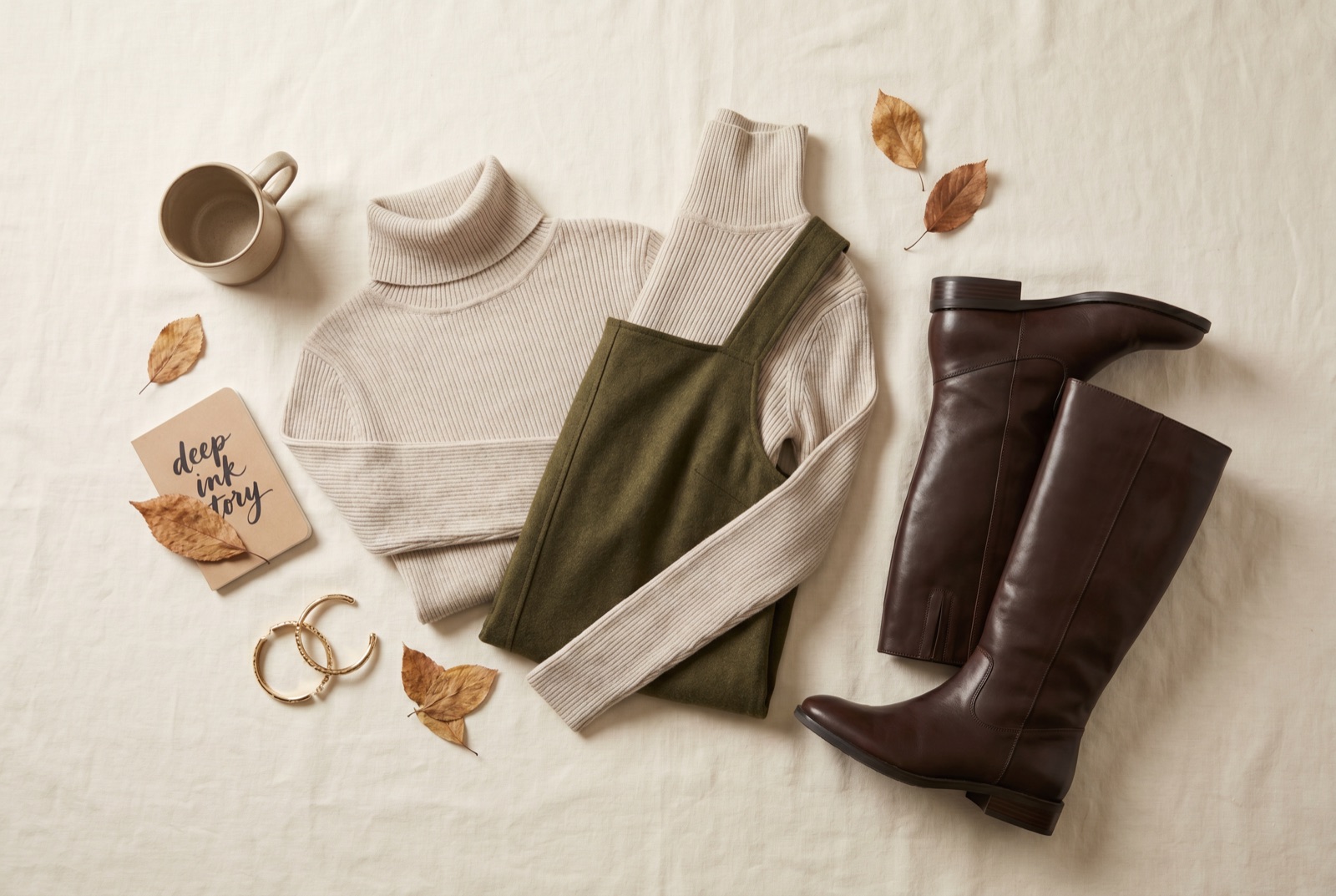
A turtleneck under a dress is one of those layering tricks that genuinely earns its place in your wardrobe. It keeps your favorite summer pieces in rotation through fall and winter, adds a polished, put-together look without much effort, and costs nothing extra if you already own both pieces. The key is choosing the right dress shape and the right knit so the combination looks intentional rather than bundled up.
Which Dresses Work Best: Slip, Shift, Pinafore and Sleeveless Styles
Not every dress lends itself to this combination. The styles that work best are those with clean lines and enough room to accommodate a knit underneath without pulling across the shoulders or bunching at the waist.
Slip dresses are the top pick. The bias cut and wide straps leave the knit visible at the neckline and wrists in a way that looks intentional. Shift dresses work for the same reason: a straight, unfitted silhouette means there is no waist seam to fight against. Pinafores are excellent because they are built to be layered. The bib-front construction frames the turtleneck neatly and the overall silhouette stays relaxed.
Sleeveless styles, including tailored sleeveless sheath dresses and casual tank dresses, also work well. Avoid bodycon styles with tight sleeves or any dress that already fits snugly across the chest and shoulders. The fabric will pull and the necklines will compete.
Pick a Thin Knit: Merino, Fine Cotton or Cashmere Blend, Second-Skin Fit
Fabric and weight make or break this look. A chunky cable-knit under a slip dress reads as an accident. A thin, fitted knit reads as a decision.
Look for merino wool, fine cotton jersey, or a cashmere blend. These fabrics are warm without adding visible bulk at the cuffs, neckline, or through the body of the dress. The fit should be close to the body without being tight. A second-skin turtleneck in merino can add a full layer of warmth while still sitting flat under even a fairly fitted shift dress.
Avoid anything ribbed in a heavy gauge, oversized, or with any kind of texture that will be visible through the dress fabric. Thin and smooth is the rule.
Color Matching: Tonal or Matching Knits Keep the Line Clean
Color choice has a significant effect on whether the layered look reads as considered or cobbled together. The simplest approach is to match the turtleneck exactly to the dress. A black turtleneck under a black slip dress creates an elongated, monochromatic effect that is both polished and practical.
Tonal combinations work nearly as well. A cream knit under a camel-colored dress, or a charcoal knit under a navy dress, keeps the eye moving vertically rather than breaking the look in half at the neckline. This is especially useful if the dress has a lower hemline or a looser fit.
If you are working with a print, pick the dominant solid shade in the pattern and match the knit to it. A floral dress with a dark green base, for example, pairs cleanly with a forest green or black turtleneck. Avoid contrasting colors unless you are confident in the combination. Black, ivory, gray, and navy are the most versatile starting points for almost any dress.
Outfit 1: Slip Dress, a Black Fitted Turtleneck and Ankle Boots
This is the version most people picture, and it works because all three pieces speak the same minimal language. A satin or silky slip dress in any neutral or muted shade, a black fitted turtleneck underneath, and ankle boots to close the gap at the hem. Add a wool coat in the same tonal family and the outfit holds from morning to evening.
For a slip dress with a deep V or wide-neck cut, the turtleneck neckline becomes the focal point, which is exactly where you want it. Keep accessories minimal. A simple chain necklace over the turtleneck, small earrings, and that is enough.
Outfit 2: A Pinafore Over a Cream Roll-Neck with Loafers
This combination leans into the scholarly, slightly nostalgic energy that pinafore dresses carry naturally. A cream or ivory roll-neck under a mid-length pinafore in denim, corduroy, or a dark plaid gives you something that looks like it was planned. Chunky loafers ground the look and keep it from feeling too precious.
This works especially well for daytime. The pinafore adds structure and the turtleneck keeps it from reading as too casual. If the pinafore has pockets, use them. If it buttons at the sides or front, leave one or two undone for a less formal result.
Daytime Hack: Turn a Cocktail Dress into an Office Look
A cocktail or party dress with a high leg or delicate fabric can feel unwearable outside of evening contexts. A fitted turtleneck changes that entirely. Layer a thin black or nude turtleneck under a short sequin dress or a sleeveless crepe dress in a bold color, add opaque tights and loafers or low heels, and the dress transitions from weekend to workday without any alteration.
The turtleneck covers exposed skin that would read as too formal or dressy for the office, and the covered arms and neck make the overall silhouette more daytime-appropriate. This is also a useful trick for wearing a dress that is slightly too cold for the season on its own.
Avoid Bulk: Where Excess Fabric Shows and How to Fix It
The most common mistake is visible bunching at the waist, shoulders, or wrists. If you are tucking a turtleneck into a dress with a defined waist, any extra fabric around the midsection will create a lumpy silhouette. The fix is to choose a knit with minimal hem and keep the tuck loose and even.
At the wrists, make sure the turtleneck sleeve sits smoothly under the dress cuff rather than gathering. A slim-cut sleeve in a thin knit rarely causes problems here. At the neckline, check that the turtleneck roll sits flat and even. If it folds unevenly, fold it down into a crew-neck position instead. That still reads as intentional and solves the problem immediately.
If you want to experiment with these combinations using clothes you already own, Vêtu can suggest outfit pairings from your actual wardrobe, styled to the weather and occasion, and let you try looks on your own photo before you get dressed. Available on the App Store and Google Play, with a free 7-day trial and no card required.
Frequently Asked Questions
Can you wear a turtleneck under a dress? Yes, and it is one of the easiest ways to wear summer dresses in winter. A thin, fitted knit under a sleeveless or loose dress works best.
What kind of turtleneck works under a dress? A lightweight, second-skin knit in merino, fine cotton or a cashmere blend. It adds warmth without bulk at the wrists, neck or hem.
What dresses can you layer a turtleneck under? Slip dresses, shifts, pinafores and sleeveless styles are ideal because they leave room for the knit underneath without pulling.
What color turtleneck should you wear under a dress? Match or tone it with the dress. Black, ivory, gray and navy are the most versatile. For prints, pick the dominant solid shade.
Does a turtleneck under a dress work for the office? Yes. Layering a fitted turtleneck under a sleeveless sheath or a cocktail-style dress adds coverage and makes the look more workday-appropriate. Stick to a thin knit in a neutral color and add opaque tights and loafers to keep the overall silhouette polished and professional.
Get outfits like these from the clothes you already own.